Saghar Zare
Piano teacher. One-to-one lessons, in person and online.

Lessons are one to one: each session is prepared for one student and one week. Lessons are for adults starting from the beginning or returning after years away, and for teenagers and children.
The aim is not to play faster. It is to know what you are playing. Reading, rhythm and listening are worked on in the first term, alongside real pieces.
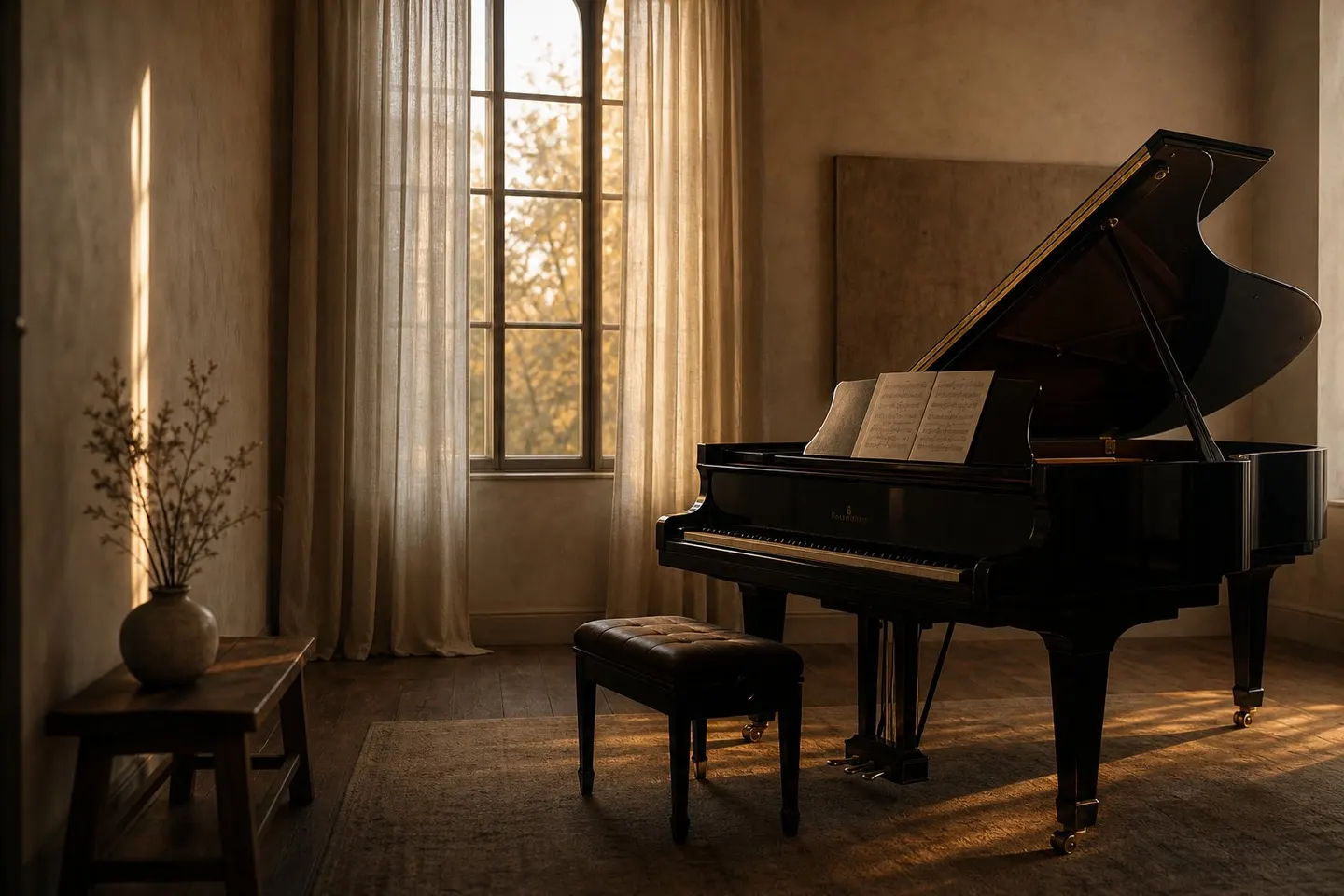
In-person lessons take place on an acoustic grand piano, while online sessions use multi-angle score and hand framing; either way, marked practice notes and granted scores stay ready in your student library.
- Lessons
- One to one
- Formats
- In person & online
- Languages
- Persian & English
How a term unfolds
From our first conversation to weekly written plans and your private score library.
- 1Week 1 · Conversation
Listening & realistic pacing
We start by understanding your musical background, goals, and real weekly schedule, then select an opening piece that rewards listening.
- 2Weekly · 45 or 60 min
Tone, focused technique & clear notes
Session time focuses on sound quality, physical ease, and solving real musical knots — closing with a concise written plan for the week.
- 3Seasonal · Student panel
Annotated scores & studio evenings
Personal access to marked PDF scores inside your student library, plus optional small-room recital evenings at season end.
Three principles
Every lesson is built on these three things.
- 1
Listening first
Before practising, we establish what the piece is trying to say and where you stand in it. Practice starts from there.
- 2
Technique is a means
Exercises appear when there is a problem to solve. Technique serves the phrase; it is not the subject of the lesson.
- 3
A written plan
After each lesson you leave with a short note: what to do, how much of it, and by when.